Golden monkey trekking in Uganda and Rwanda.
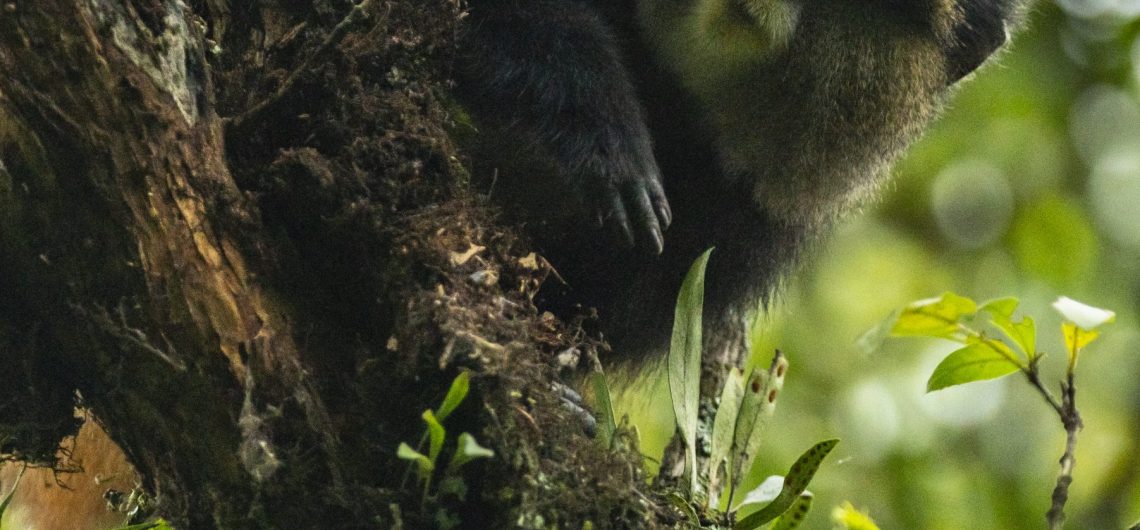
Golden monkey trekking activities are some of the fascinating touristic activities that have taken shape and gained popularity in the past two decades among travelers in East Africa. This activity takes place in the Virunga Mountain ranges where these primates are endemic to. Golden monkeys are a subspecies of the blue monkey and there are other monkeys in Eastern Africa that almost look like these orange- and gold-colored primates. They inhabit the forests in central Africa, especially in the highlands. Golden monkeys prefer bamboo habitats and that is where they are usually trekked.
Golden monkey trekking national parks in Uganda and Rwanda.
Uganda and Rwanda host the endangered golden monkeys. They can be found in the thick rainforests where national parks have been gazetted in the past two decades to ensure they are protected and conserved for the next generations. The national parks encompass;
Mgahinga national park.
Mgahinga National Park is the only National Park in Uganda that hosts golden monkeys. The park is located in the southwest of Uganda in Kisoro district and occupies an area of approximately 33.7 square kilometers. Mgahinga spans 3 of the 8 Virunga mountains that are great habitat for the golden monkeys. It is on the slopes of the mountains that the golden monkey’s exciting adventure takes place.
Gishwati-Mukura National Park.
Gishwati-Mukura National Park is comprised of two thick primeval rainforests that is to say Gishwati and Mukura after which the park is named. The park occupies an area of about 34 square kilometers in the northwest of Rwanda. It is a renowned home to several primates and golden monkeys are a section of them. Serious tourism in the park started in 2019 and it is now booming due to the popularity of the activities therein, a reason why an adventure-seeking traveler should check it out whenever in Rwanda.
Volcanoes National Park.
Sitting on an area of approximately 160 square kilometers in the north of Rwanda, Volcanoes National Park is a portion of the huge Virunga conservation area. It is home to five of the 8 Virunga mountains which are the exact place where the golden monkeys reside and their trekking activities are hosted.
Volcanoes are home to not only golden monkeys but other primates too, especially the black and white colobus monkeys, red-tailed monkeys, l’hoests, blue monkeys and owl-faced monkeys not forgetting the beautiful bird species too, especially the East African endemics. They encompass green turacos, green breasted pitta, bar-tailed trogon, bush shrikes, African paradise flycatcher, African fish eagles, African green pigeons, African darters and jacanas.
Volcanoes National Park is a renowned one-stop center for golden monkey trekking in Rwanda and offers extremely sensational experiences.
How it is done and what it costs.
The golden monkey trekking activity enables the visitor to explore the forests in East Africa, moving through various landscapes on foot in search of exciting creatures.
Once encountered, visitors are allowed to spend at least an hour observing the golden monkeys. Taking pictures of them and learning several things about them. The tourist guides provide information about the genetics and other aspects of the lives of the golden monkeys which even make the trip more exciting and informative.
Golden Monkey trekking permits in Uganda can be purchased at $60.00 for foreign nonresidents, $60.00 for foreign residents, and Uganda shillings 40,000 for East African citizens and in addition to this you add the park entry fees. In Rwanda, the Golden Monkey permits cost $100 for the foreign nonresidents, $65 for the foreign residents, and Rwandan francs 4000 for the Rwandan citizens.
The most appropriate time to visit and trek golden monkeys.
Uganda and Rwanda are closely located near the equator though Rwanda is not crossed by it like Uganda. Due to that fact, they are blessed with two seasons every year that is to say the dry and wet seasons. The dry seasons are the best to traverse through the rainforests and mountainous terrain.
The dry seasons occur from May to September and December to early March.